
Robot Vacuums · Head-to-head
iRobot Roomba 105 vs Roborock Q5 Max+: When the Budget Pick Out-Specs the Premium One
Shop the sub-$450 self-emptying tier and these two keep surfacing together: both skip mopping, both run real LiDAR mapping, and both dock into a base that empties itself for weeks. On paper they're near-twins. The wrinkle is the pecking order — the cheaper Roomba 105 actually out-scores the pricier Roborock Q5 Max+, which inverts the usual budget-versus-premium logic and makes the pick less obvious than the price tags suggest.
The short answer
Pick the iRobot Roomba 105 Vac + AutoEmpty if cleaning is what you are buying for — 6/10 against 5/10, and it is the cheaper of the two by $130.
Pick the Roborock Q5 Max+ if you find it cheaper on the day: the engine scores them level on every dimension.
iRobot
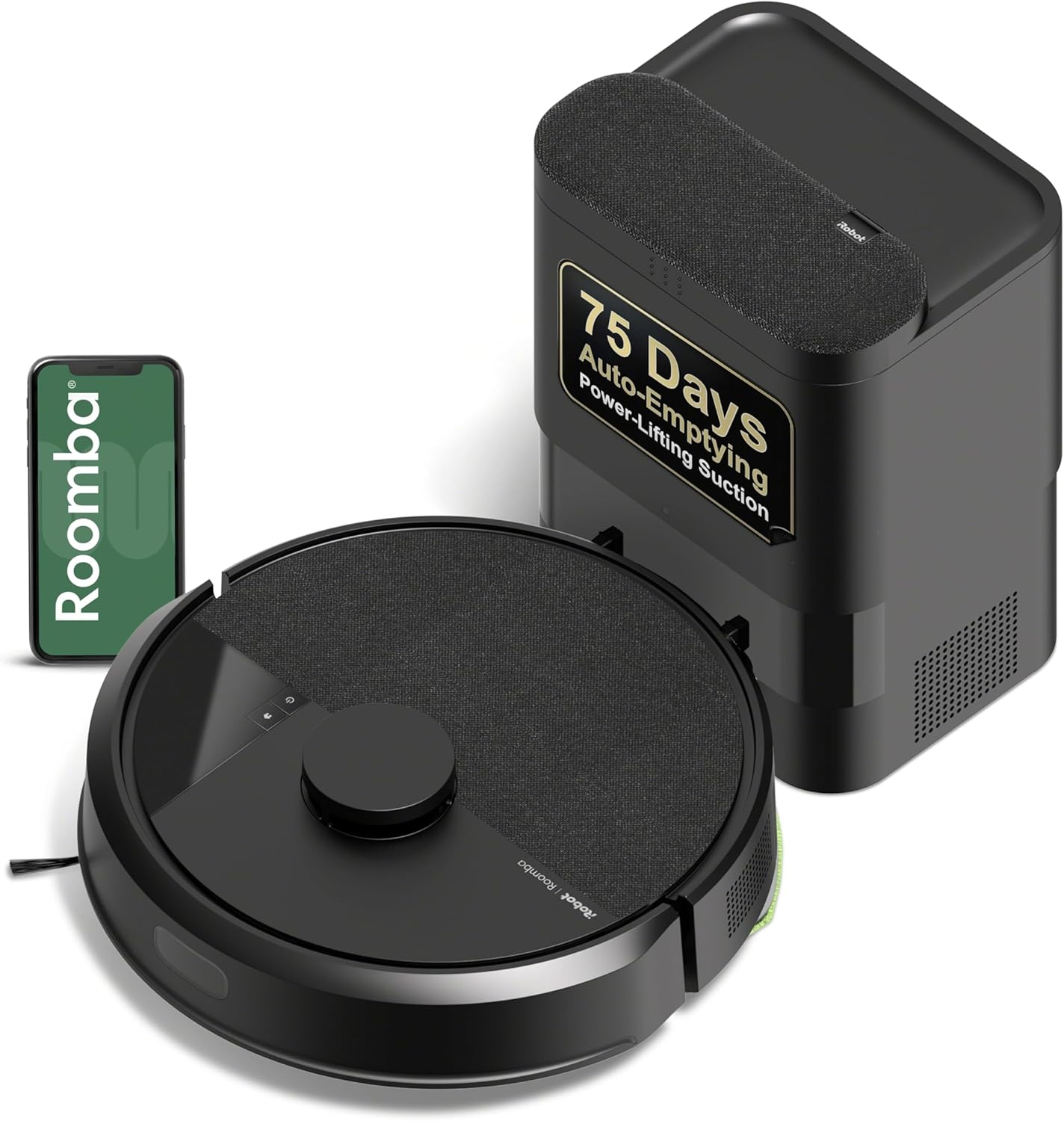
Roomba 105 Vac + AutoEmpty
The new-generation Roomba with LiDAR and a 75-day dock
Typical price
$300
6.3
/10 overall

Roborock
Q5 Max+
Vacuum-only specialist with DuoRoller and self-empty
Typical price
$430
6
/10 overall
Scores side by side
| Dimension | iRobot Roomba 105 Vac + AutoEmpty | Roborock Q5 Max+ |
|---|---|---|
| Cleaning | ||
| Navigation | ||
| Autonomy | ||
| Overall |
Key specs
| Spec | iRobot Roomba 105 Vac + AutoEmpty | Roborock Q5 Max+ |
|---|---|---|
| Suction (advertised) | 7,000 Pa | 5,500 Pa |
| Dock | Self-empty dock (weeks between empties) | Self-empty dock (weeks between empties) |
| Mop system | None (vacuum only) | None (vacuum only) |
| Navigation | LiDAR | PreciSense LiDAR |
| Typical street price | $300 | $430 |
Suction: a bigger number that doesn't clean proportionally better
The Roomba's 7,000 Pa towers over the Roborock's 5,500 Pa on the box, but Pascal ratings run on steep diminishing returns and are half marketing — don't read that as a quarter more cleaning. The engine's cleaning scores are the honest signal: 6/10 versus 5/10, a single step apart. The Roomba does pull ahead, mostly when lifting ground-in debris from carpet, while both handle hard floors and surface dust competently. Neither is a deep-carpet specialist. Real edge to the Roomba, but a modest one.
Navigation and dock: a genuine tie
Both robots run laser LiDAR — iRobot's newer system and Roborock's PreciSense — and the engine scores navigation identically at 7/10: methodical row-by-row paths, actual room maps, none of the random bouncing cheaper robots rely on. Both dock into a self-emptying base, so you touch the bin every few weeks instead of after each run, and autonomy ties at 6/10. Neither mops, so wet-cleaning stays out of the decision. If you wanted one to clearly out-navigate or outlast the other, it doesn't happen here.
Price-to-value: the budget robot wins, so who's the Roborock for?
This is the tension. The Roomba costs $300 and carries the higher overall score; the Roborock asks $430 for slightly less cleaning and a dead heat everywhere else. On the numbers alone, the budget model is also the value model — unusual, but that's where it lands. The Roborock earns its premium on software: its app is the more mature of the two, with granular scheduling, zone cleaning, and multi-floor maps, and anyone already running Roborock gear gets one app for the house. You're paying for polish, not suction.
Choose the iRobot Roomba 105 Vac + AutoEmpty if…
- Higher overall score: 6.3/10 against 6/10
- Better cleaning: 6/10 against 5/10
- Costs $130 less: $300 against $430
Choose the Roborock Q5 Max+ if…
- Nothing in the scored data favors it — the iRobot Roomba 105 Vac + AutoEmpty matches or beats it on every dimension and does not cost more
Verdict
Most buyers should take the Roomba 105: it's cheaper, cleans a little better, and matches the Roborock on navigation, dock, and autonomy — the rare time the budget model is also the smart buy. Pick the Roborock Q5 Max+ only if you specifically want its more capable app and multi-floor control, or you already live in the Roborock ecosystem. And since neither mops, if wet-cleaning is on your list, both belong on a different shortlist.
Still not sure?
Answer a few questions about your space and how you will use it, and the engine narrows the whole catalog down to the robot vacuum that fits.
See also
Scores come from published manufacturer specs, normalized 1 to 10 across the whole catalog: cleaning (suctionPa, Pa), navigation (nav), autonomy (dock). The overall figure is the weighted mean of those dimensions, and the same weights apply to every model on the page.
Amazon links are affiliate links (tag: habilytics-20), at no extra cost to you. Scores and selection are computed from verified specs and never influenced by commissions.