
Espresso Machines · Head-to-head
Gaggia Classic Evo Pro vs Breville Bambino: which espresso machine should you actually buy?
These two get cross-shopped constantly, and the price tags point the wrong way. The Gaggia Classic Evo Pro sits at $450, the Breville Bambino at $300, and the cheaper machine is the one that comes out ahead: 6.0 overall against 5.7. That is not a verdict on which pulls better espresso - the Gaggia wins that outright, 8 to 7.
It is a verdict on what the extra $150 buys, and what it costs you. Both overall numbers are averages of three dimensions - espresso quality, milk, and ease of use - and the Gaggia's ease-of-use score of 3 is what drags it under. Whether that matters depends entirely on how much of the work you want to do yourself.
The short answer
Pick the Gaggia Classic Evo Pro if espresso is what you are buying for — 8/10 against 7/10.
Pick the Breville Bambino if ease is what you are buying for — 5/10 against 3/10, and it is the cheaper of the two by $150.
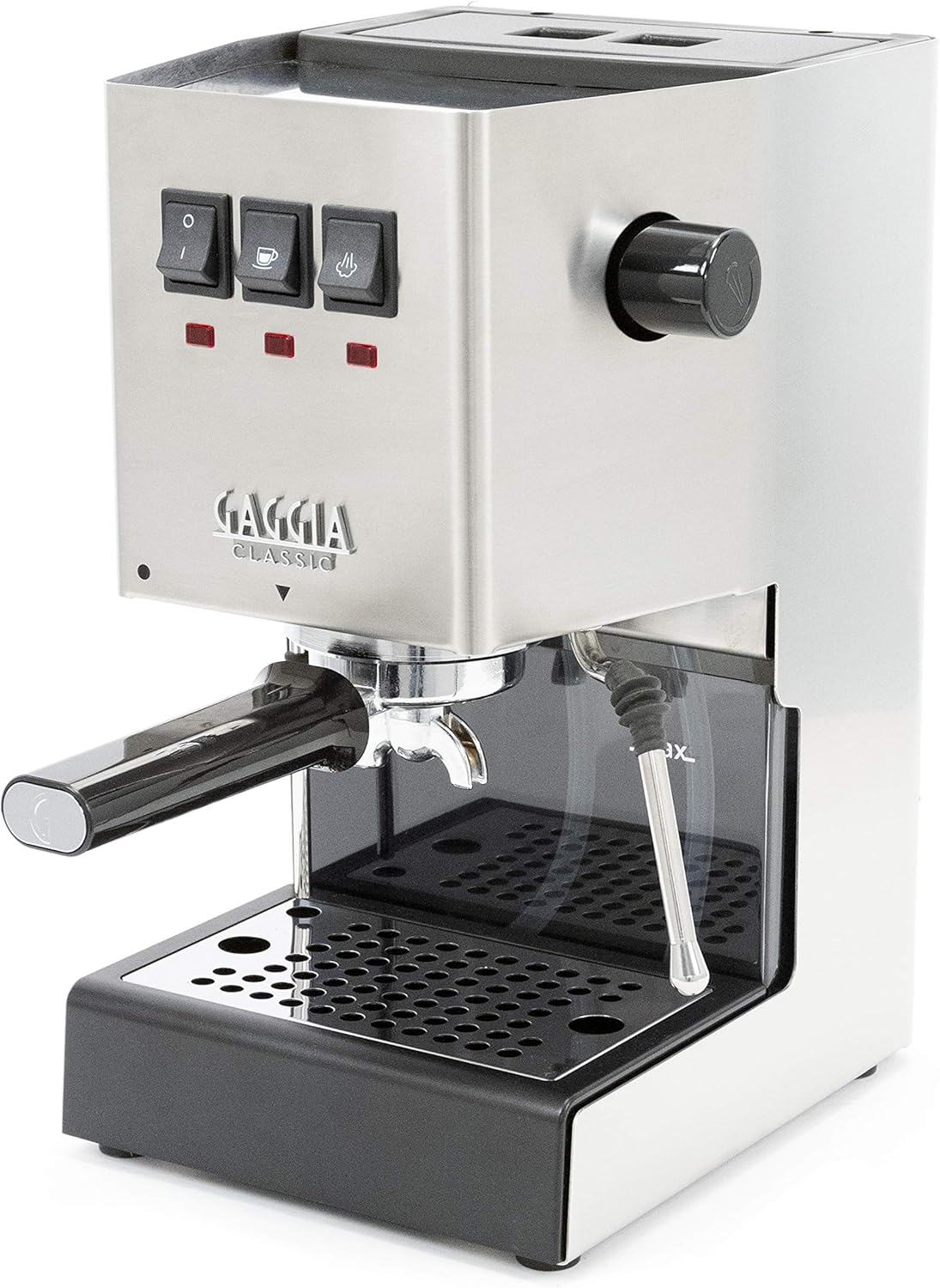
Gaggia
Classic Evo Pro
Commercial 58mm portafilter, cult following, zero shortcuts
Typical price
$450
5.7
/10 overall

Breville
Our pickBambino
ThermoJet speed and true 54mm extraction, compact
Typical price
$300
6
/10 overall
Scores side by side
| Dimension | Gaggia Classic Evo Pro | Breville Bambino |
|---|---|---|
| Espresso | ||
| Milk | ||
| Ease | ||
| Overall |
Key specs
| Spec | Gaggia Classic Evo Pro | Breville Bambino |
|---|---|---|
| Machine class | manual | semi |
| Built-in grinder | No | No |
| Milk system | wand | wand |
| Street price | $450 | $300 |
| Typical street price | $450 | $300 |
What the 6.0 and the 5.7 actually measure
Both numbers are straight averages of three scores: espresso quality, milk performance, and ease of use. No weighting, no thumb on the scale. The Gaggia posts 8 for espresso, 6 for milk, 3 for ease, which averages to 5.7. The Bambino posts 7, 6 and 5, which averages to 6.0.
Read that line by line and the shape of the decision appears. Milk is a tie at 6, because both machines hand you a manual steam wand and expect you to learn to use it. On our scale a manual wand tops out at 6 no matter whose badge is on it; automatic texturing systems score 8. Espresso goes to the Gaggia by a point, and that point is real. Ease of use goes to the Bambino by two, and that is the entire margin.
The ease scale is worth spelling out, because 5 is not a compliment. A pure manual machine sits at 3. A plain semi-auto sits at 5. Assisted semi-autos reach 6 or 7, and one-touch super-autos run 8 to 10. So the winner of this matchup wins with a mid-table ease score. Neither of these machines makes espresso happen while you look at your phone.
Where the Gaggia is the better machine
The Gaggia's 8 for espresso is the highest score either machine posts on any dimension, and it comes straight from the hardware. The Classic Evo Pro uses a 58 mm commercial portafilter - the size used behind cafe counters - where the Bambino uses 54 mm. That matters twice over. Baskets and tampers built for the commercial size are easy to find, and they carry over if you move up to a more serious machine later. The Evo Pro refresh also brings a commercial steam wand.
The less measurable advantage is headroom. The Evo Pro is the modding favorite of this category, which is a polite way of saying owners keep changing things and the machine keeps rewarding it. Someone who reads about pressure profiles and puck prep for fun has somewhere to go with this one. None of that shows up in an overall score, and it should not, because the payoff only exists if the owner does the work.
The catch is priced in. At a $450 reference price, with a street range of $400 to $520, this is the more expensive machine here, and it ships without a grinder. Neither of these includes one - but the Gaggia takes more of the budget before the grinder conversation even starts. Its ease-of-use score of 3 is the floor of the scale, and that is fair: this is the steepest learning curve of the two.
Where the Bambino earns the win
Two things earn the Bambino its 6.0. The first is heat-up. Its ThermoJet system reaches brew temperature in about three seconds, which sounds like a spec-sheet flourish until you count how many mornings you would rather not stand around waiting. A machine you can use on a Tuesday at 7 a.m. gets used. One that needs a warm-up ritual gets used on weekends.
The second is price. At a $300 reference, street range $270 to $350, the Bambino costs roughly $150 less than the Gaggia. Neither machine includes a grinder, and at this level the grinder is not an accessory - it is the component that decides whether your espresso is any good. That $150 is grinder money. Putting it there instead of into the machine is usually the higher-return move.
What it gives up is a point of espresso quality. The 54 mm portafilter puts it in the quality semi-auto tier at 7, not the 8 the 58 mm Gaggia earns. Milk is the same manual-wand 6 on both. Ease is 5: better than 3, but this is still a machine that expects you to dose, tamp and steam. It is compact, it is quick, and it is honest about what it is.
When neither one is the right buy
The most useful answer is sometimes neither. Three cases.
You drink milk drinks every day. Both machines score 6 on milk, and that is the ceiling for a manual steam wand on this scale - machines with an automatic texturing wand score 8. Six is not bad, but it is a skill score as much as a hardware one. If nobody in the house wants to practice steaming, the money is better spent on a machine that textures milk for you.
You do not have a grinder and do not plan to buy one. Neither of these includes one, and pre-ground coffee wastes both a 58 mm and a 54 mm basket. Budget for machine plus grinder as one number. If that combined number is $300, the honest move is to wait, or to start further down the range and upgrade later.
You want to press a button. Ease scores of 3 and 5 both mean hands-on. One-touch machines score 8 to 10 on the same scale, and there is no shame in wanting that instead.
One more wrinkle: street prices move. The Gaggia ranges $400 to $520 and the Bambino $270 to $350. Most of the time the choice is between roughly $450 and $300, but at the edges the gap narrows to about $50 - and at $50, the grinder argument gets much weaker.
Choose the Gaggia Classic Evo Pro if…
- Better espresso: 8/10 against 7/10
Choose the Breville Bambino if…
- Higher overall score: 6/10 against 5.7/10
- Better ease: 5/10 against 3/10
- Costs $150 less: $300 against $450
Verdict
Buy the Breville Bambino. It wins 6.0 to 5.7, it costs about $150 less, and the money you save is the grinder you are going to need anyway. It is the right call for most people shopping this pair. Buy the Gaggia Classic Evo Pro if you already own a good grinder, you want the 58 mm commercial format, and the phrase steepest learning curve reads as a feature. Its 8 for espresso is the best number in this comparison and the Bambino cannot match it. Buy neither if you want milk drinks with no technique, or a button.
Still not sure?
Answer a few questions about your space and how you will use it, and the engine narrows the whole catalog down to the espresso machine that fits.
See also
Scores come from published manufacturer specs, normalized 1 to 10 across the whole catalog: espresso (type), milk (milkSystem), ease. The overall figure is the weighted mean of those dimensions, and the same weights apply to every model on the page.
Amazon links are affiliate links (tag: habilytics-20), at no extra cost to you. Scores and selection are computed from verified specs and never influenced by commissions.